
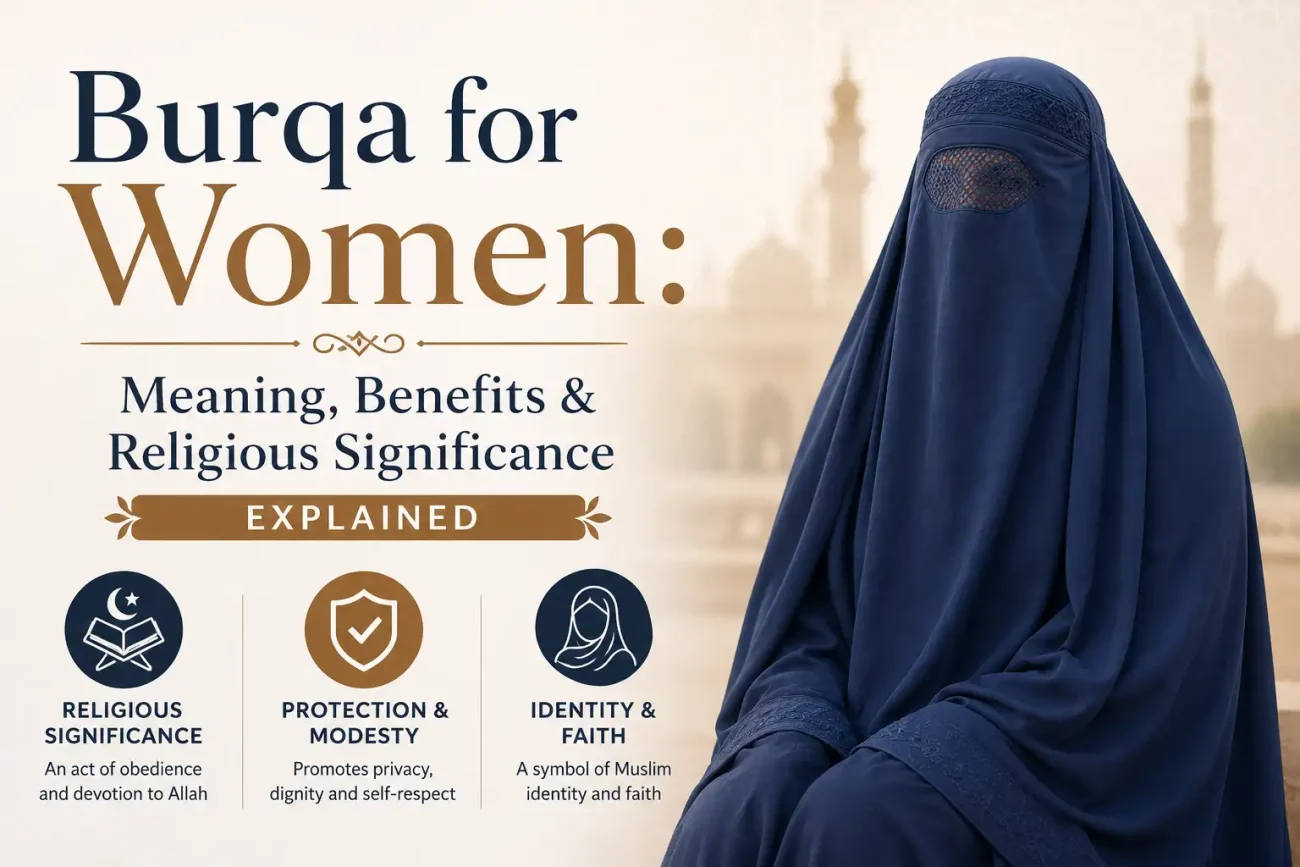
For millions of Muslim women around the world, the burqa is far more than a piece of clothing. It is a statement of faith, a source of comfort, and a deeply personal choice. This article explains what the burqa is, why women wear it, and what it means within Islam.
What Is a Burqa? Understanding the Meaning
The word “burqa” comes from the Arabic root meaning to conceal or cover. It refers to a full-body outer garment worn by some Muslim women that covers the entire body, including the face and eyes. The eye area is typically covered by a woven mesh screen that allows the wearer to see whilst remaining fully concealed from view.
It is important to understand that the burqa is one of several types of Islamic covering, and the terms are often confused in mainstream media. Here is a clear breakdown of the key differences:
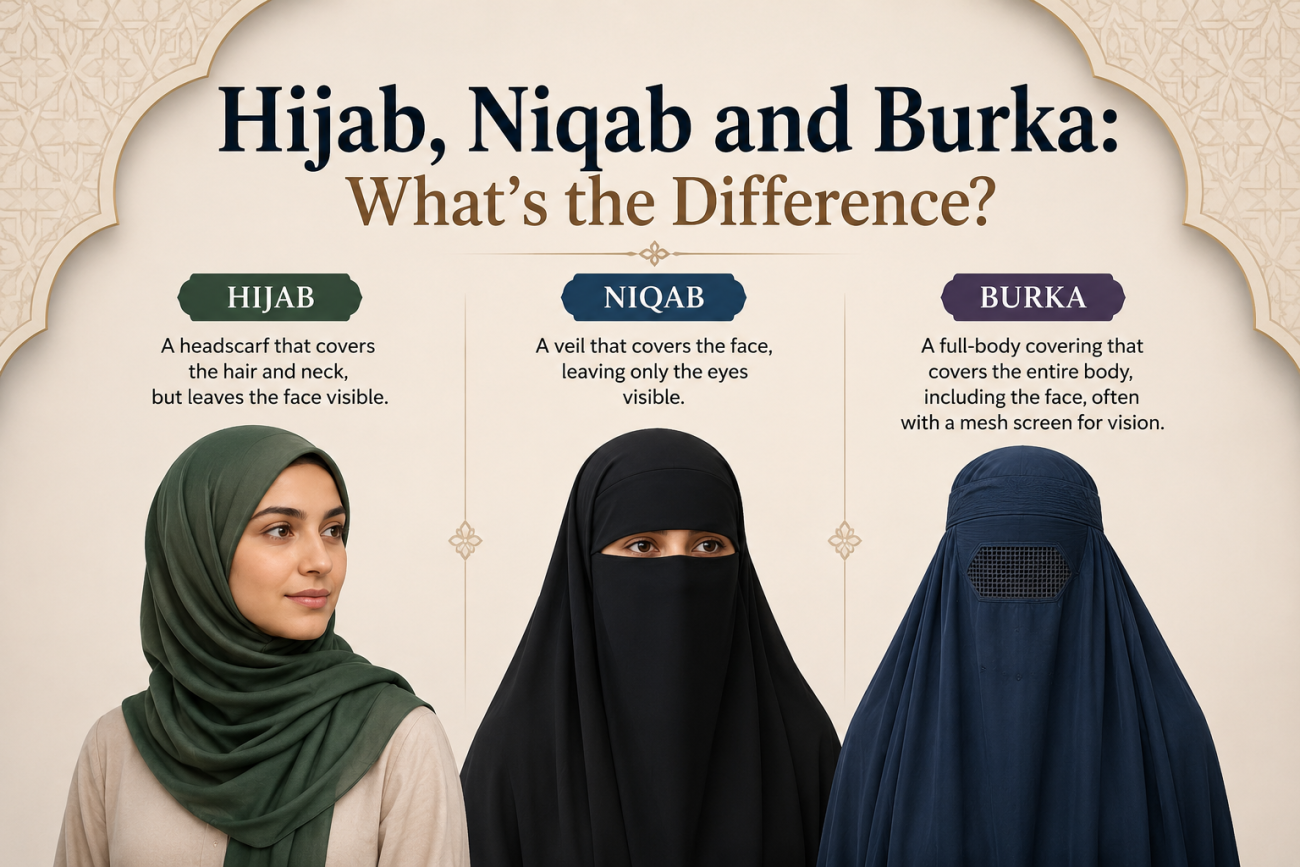
Burqa – covers the entire body from head to toe, including the face and eyes, with a mesh screen over the eyes. It is the most complete form of covering and is most commonly associated with Afghanistan and parts of South Asia.
Niqab – covers the body and face but leaves the eyes visible. It is worn across the Middle East, South Asia, and parts of Africa and Europe.
Hijab – a headscarf that covers the hair, neck, and ears but leaves the face fully visible. It is the most widely worn form of Islamic covering globally. To understand its deeper meaning, read our full guide on what is hijab in Islam.
Chador – a full-body cloak worn primarily in Iran that covers the head and body but leaves the face open.
Khimar – a long cape-like scarf that covers the hair, neck, and shoulders but not the face.
Understanding these distinctions matters because debates, laws, and media coverage frequently conflate these garments, treating them as interchangeable when they are not. For a detailed side-by-side comparison, see our guide on the difference between hijab, niqab, and burqa.
The Religious Significance of the Burqa in Islam
The religious basis for covering in Islam comes primarily from two sources: the Quran and the Hadith (the recorded sayings and practices of the Prophet Muhammad, peace be upon him).
The Quranic Foundation
Several verses in the Quran instruct believing women to guard their modesty and draw their coverings over themselves. Scholars most frequently cite Surah An-Nur (24:31) and Surah Al-Ahzab (33:59) as the theological foundation for Islamic dress. The precise interpretation of these verses – particularly how much of the body and face must be covered – has been a subject of scholarly discussion for centuries.
Scholarly Interpretations
Islamic scholarship is not uniform on the question of face covering. There are broadly two positions held by respected scholars:
The first holds that covering the face is obligatory (fard) for Muslim women in the presence of unrelated men. Scholars of the Hanbali school of Islamic jurisprudence, as well as many contemporary scholars in South Asia and parts of the Arab world, hold this view. For women who follow this interpretation, the burqa or niqab is not a cultural practice but a religious duty.
The second position holds that covering the face is highly recommended (mustahabb) but not strictly obligatory, provided the rest of the body is appropriately covered. Scholars who hold this view point to historical evidence that the face and hands were considered permissible to leave uncovered in classical Islamic jurisprudence.
What both positions share is a profound respect for the concept of modesty (haya in Arabic), which is considered a core virtue in Islamic character for both men and women.
Cultural and Regional Variation
The burqa as a specific garment – the full-body covering with a mesh eye screen – is most closely associated with Afghan and Pashtun cultural tradition, where it has been worn for centuries. The niqab, by contrast, has roots across the broader Arab world and South Asia. In many Muslim communities, particularly in South-East Asia and West Africa, face covering is rare or uncommon, and the hijab alone is considered sufficient.
This regional variation illustrates that Islamic practice is shaped both by religious scholarship and by local culture, and that no single garment represents the entirety of Muslim women’s experience. If you would like to explore the full range of coverings worn by Muslim women today, our guide to hijab types covers each style in detail.
The Benefits of Wearing the Burqa
When Muslim women who wear the burqa or niqab are asked about their experience, they describe a range of spiritual, psychological, and social benefits. These accounts are important because they are so rarely centred in mainstream coverage of this topic.
Spiritual Closeness to God
For many women, wearing the burqa is an act of worship. It is a daily, visible expression of their submission to God and their commitment to living according to their faith. The act of covering is experienced not as a burden but as a privilege – a way of feeling spiritually protected and close to their Creator throughout the day.
A Sense of Modesty and Dignity
Modesty in Islam is understood as far more than physical covering. It encompasses humility, conduct, speech, and character. For women who wear the burqa, the garment is an outward expression of an inner value they hold deeply. Many describe feeling a sense of dignity and self-respect in being seen first and foremost as a person rather than for their physical appearance.
Freedom from the Male Gaze
A number of women who wear full face covering describe feeling liberated rather than restricted. In a world where women’s appearances are constantly scrutinised, judged, and commented upon, the burqa removes physical appearance from the equation entirely. Women report feeling free to move through public spaces without being assessed on the basis of their looks – a form of freedom that many find deeply meaningful.
A Strong Sense of Identity
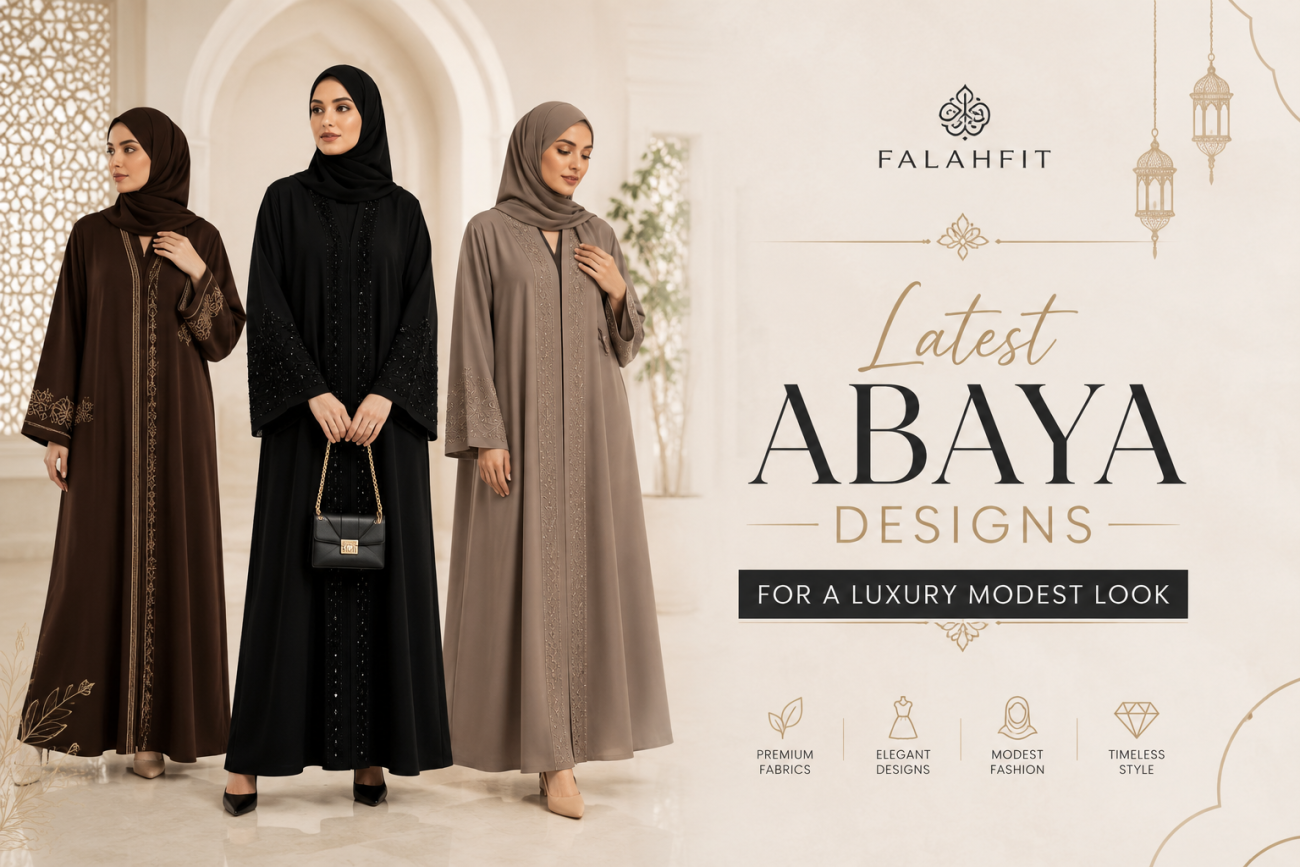
For many women, the burqa or niqab is a powerful marker of identity. It signals who they are, what they believe, and where they stand. In communities where it is worn, it creates a sense of belonging and solidarity. For women in minority Muslim communities in Western countries, wearing it can be an act of quiet confidence and conviction – a refusal to diminish or conceal one’s faith in order to assimilate. Many women also express their identity and modesty through beautifully crafted modest wear – if you are looking for inspiration, browse our collection of latest abayas for women.
Protection and Privacy
Some women describe the practical sense of protection the garment provides – physical protection from the elements in hot, dusty, or cold climates, as well as a sense of personal privacy in public spaces. Being fully covered means that one’s expressions, emotions, and physical self are shared only with those one chooses to share them with.
Personal Empowerment Through Choice
Perhaps most importantly, for women who choose to wear the burqa freely, the act of choosing is itself empowering. The decision to wear it – often against social or political pressure in Western contexts – is experienced as an assertion of personal agency and religious conviction. Many women who wear the niqab in countries where it draws negative attention report that doing so requires and builds considerable inner strength.
Common Misconceptions About the Burqa
Given how frequently the burqa appears in political debate, it is worth addressing several widespread misconceptions directly.
Misconception 1: All women who wear the burqa are forced to do so
This is simply not accurate. Whilst coercion does exist in some contexts – most notably under the Taliban regime in Afghanistan, where the burqa is legally compelled – many women around the world choose to wear it freely. Research and first-hand accounts from women in the United Kingdom, France, the United States, and across the Muslim world consistently show that many niqab-wearing women made the decision independently, often against the wishes of family members or in spite of social pressure to remove it.
Misconception 2: The burqa is mentioned specifically in the Quran
The Quran does not mention the burqa by name. It instructs modesty and covering in general terms, and Islamic scholars have derived various dress requirements through interpretation of these verses and the Hadith. The specific form of covering – whether burqa, niqab, or hijab – reflects both scholarly interpretation and cultural tradition.
Misconception 3: The burqa and hijab are the same thing
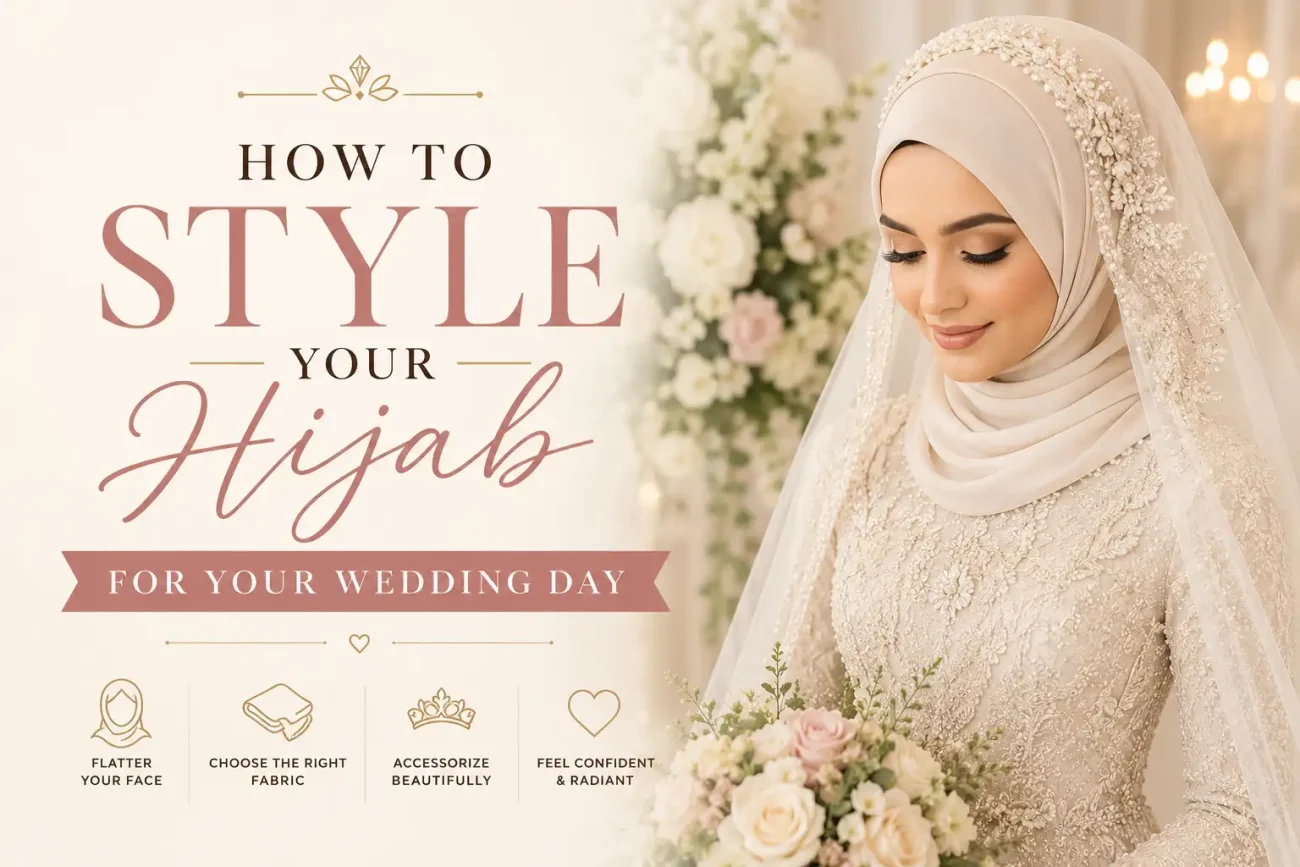
As explained above, these are distinct garments with different degrees of coverage and different cultural associations. Conflating them leads to considerable confusion in both political debate and everyday conversation. The hijab in particular takes many forms and can be styled in countless ways for different occasions – from everyday wear to formal events. If you are curious, our guide on how to style hijab for your wedding day is a good example of how versatile and expressive modest dress can be.
Misconception 4: Wearing the burqa is a sign of oppression
This assumption removes women’s own voices and experiences from the conversation. Whilst it is true that the burqa has been used as a tool of control in certain political contexts, it does not follow that the garment is inherently oppressive. The same object can carry entirely different meaning depending on whether it is chosen or imposed. Many women who wear the burqa describe their experience in terms of freedom, faith, and self-determination – not oppression.
The Burqa in the United Kingdom
In the United Kingdom, there is no law banning the burqa or niqab. Women are legally free to wear full face coverings in public spaces, and the right to manifest one’s religion is protected under the Human Rights Act 1998 and the Equality Act 2010.
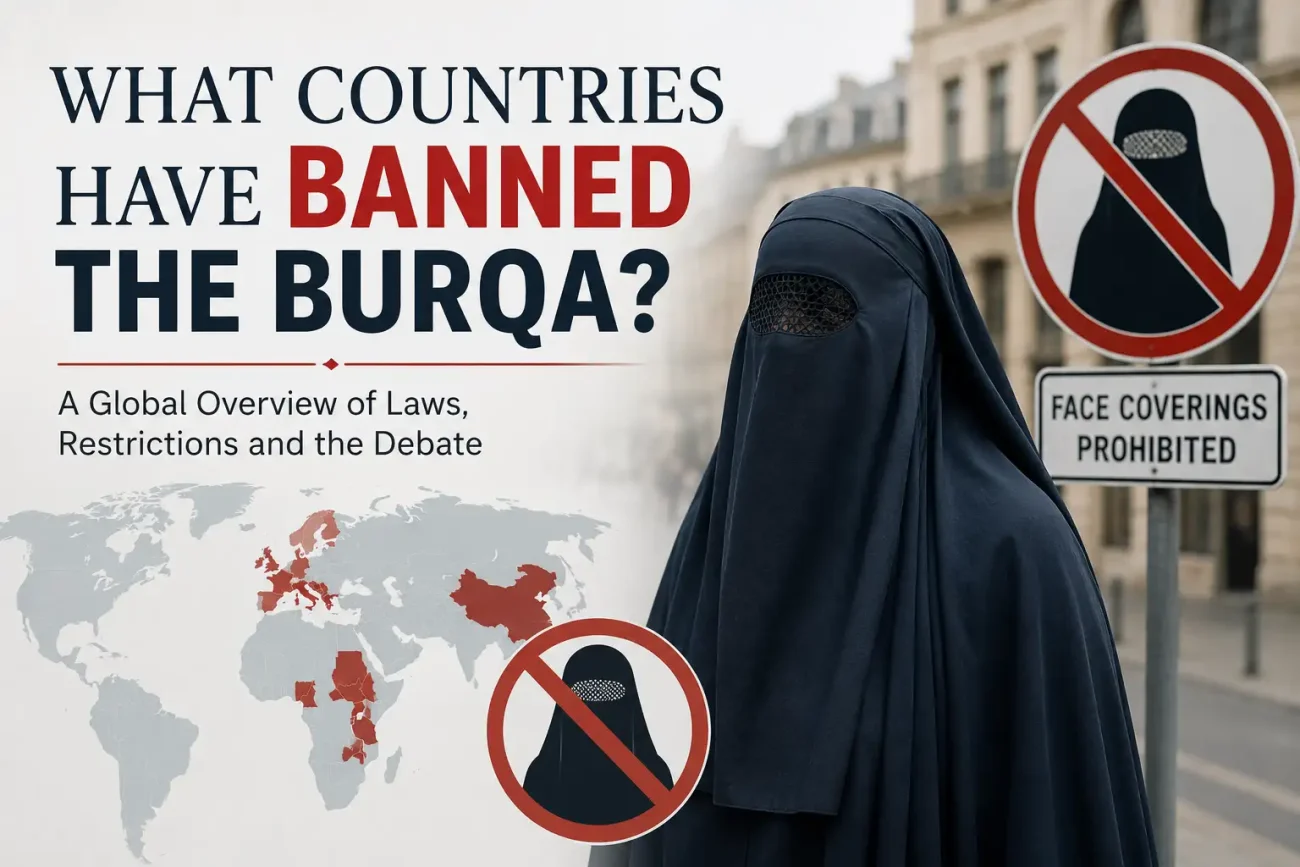
The debate in the UK has been ongoing, with periodic calls from politicians and commentators for restrictions. However, successive governments have declined to legislate on the matter, and British courts have upheld religious dress rights in a number of cases. For a broader picture of how different governments around the world have approached this issue, read our detailed guide on what countries have banned the burqa.
Individual institutions – some schools, courts, and employers – have introduced their own policies on face coverings, and these have been subject to legal challenge. The broader public conversation in Britain continues to evolve, shaped by discussions around integration, identity, and religious freedom.
Conclusion: Understanding Before Judging
The burqa is one of the most debated garments in the modern world, yet it is rarely understood on its own terms. For the women who wear it, it is not a political symbol or a provocation. It is an expression of faith, a source of spiritual strength, and in many cases a freely made personal choice.
Understanding what the burqa means – its religious roots, its cultural variations, and the genuine benefits that women who wear it describe – is an essential starting point for any honest conversation about it. Whether one agrees with the practice or not, that understanding deserves to come before judgement.
This article is written for informational purposes and aims to present the burqa on its own terms, drawing on Islamic scholarship and the lived experiences of Muslim women. It does not advocate for or against any particular position on related legal or political debates.

Leave a comment