
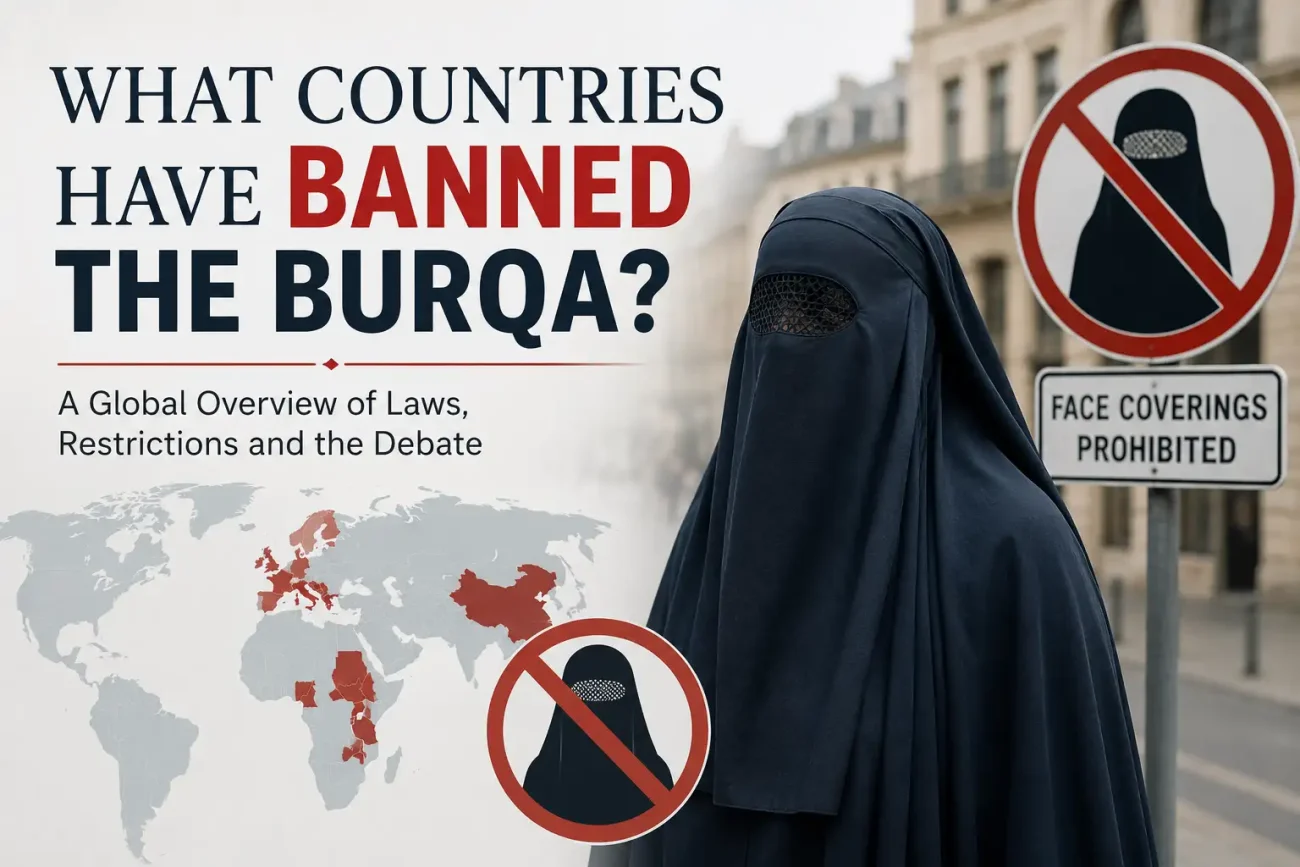
A garment worn by a small minority of women has become one of the most politically charged symbols of our time – dividing governments, courts, feminists, and Muslim communities alike.
A Cloth That Sparked a Global Conversation
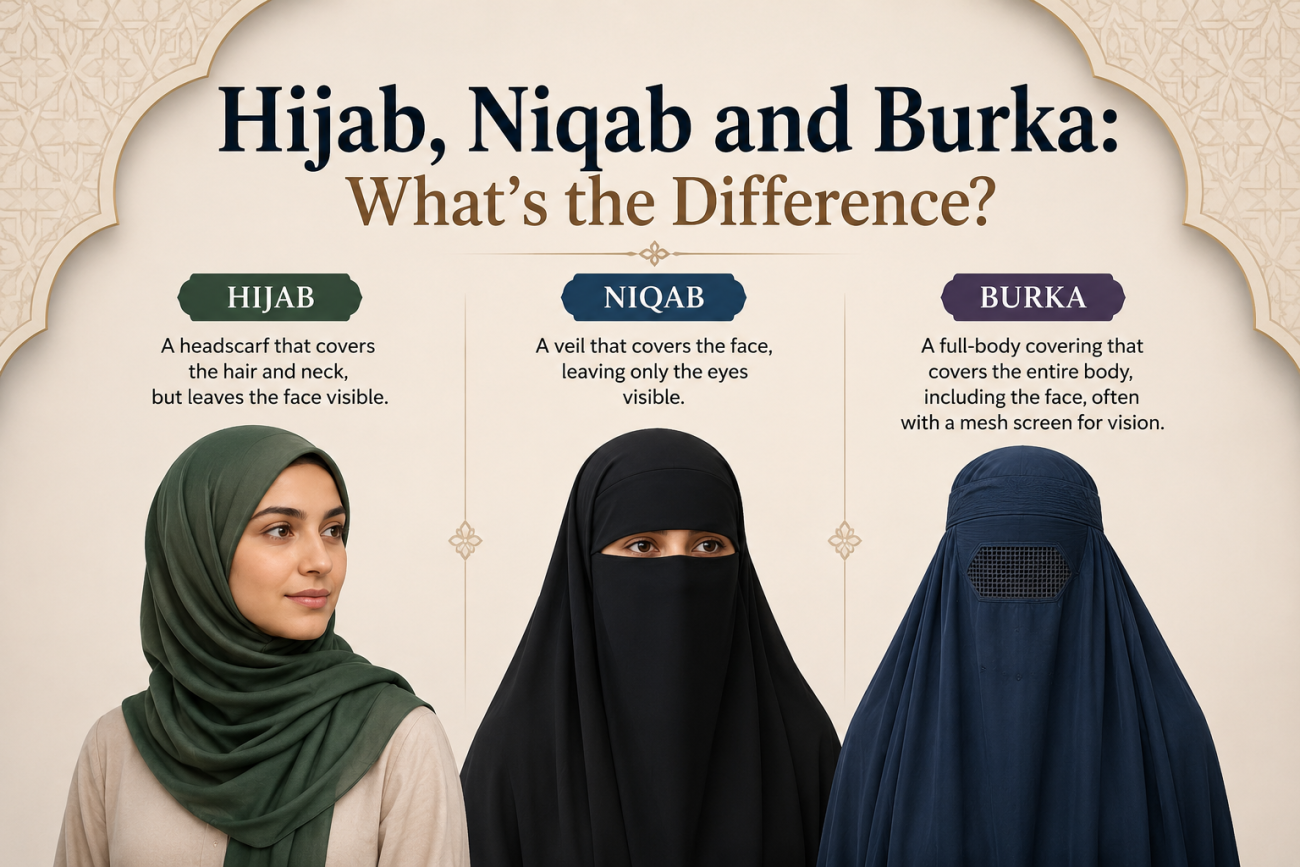
The burqa – a full-body covering that conceals even the eyes behind a mesh screen – and the niqab, which leaves only the eyes visible, are worn by a relatively small number of Muslim women worldwide. Yet few items of clothing have generated as much legislation, controversy, and passionate debate as these garments.
People across the world are increasingly asking: what countries have banned the burqa, and why? The answers reveal a political landscape far more complex than most expect. Over the past two decades, more than 24 countries have introduced full or partial bans on face-covering veils. From France to Kazakhstan, from Chad to Italy, governments across wildly different cultures and political systems have reached similar conclusions – and drawn similar criticism. Understanding why requires looking at this issue from every angle: security, identity, religious freedom, and women’s rights.
Which Countries Have Outlawed the Burqa? A Global Map
The first thing that surprises most people researching nations that prohibit the niqab is just how geographically diverse the list is. This is not simply a Western, anti-Islam phenomenon. Countries banning full-face veils span multiple continents, religions, and political systems.
In Europe, France led the way with one of the broadest face covering ban laws, prohibiting face coverings across all public spaces. Belgium, Austria, Denmark, Bulgaria, the Netherlands, Luxembourg, Switzerland, Portugal, and Italy have followed. Switzerland’s Islamic veil ban came into effect on January 1, 2025, carrying fines of up to CHF 10,000 (roughly $11,000) for violations.
In Africa, the burqa prohibition laws are largely security-driven. Chad banned the burqa in 2015 after a suicide bombing in its capital killed dozens of people – the government called the garment “camouflage.” Cameroon, Gabon, the Republic of Congo, Senegal, Tunisia, and Zambia have all enacted similar measures, often in response to attacks where assailants used full-face coverings to conceal their identities or weapons.
In Central Asia, the picture is even more striking when examining face veil ban countries. Muslim-majority nations – Kazakhstan, Kyrgyzstan, Tajikistan, Turkmenistan, and Uzbekistan – have all banned the burqa or niqab, framing the garment as a foreign import incompatible with their national cultures. Kazakhstan’s ban took effect on July 1, 2025. Tajikistan went furthest of all, banning even the hijab in 2024, describing it as “foreign clothing” that undermines national identity.
Sri Lanka made its niqab prohibition permanent in 2021 following the devastating 2019 Easter Sunday bombings, in which over 260 people were killed. China has banned face veils in its Xinjiang region as part of sweeping anti-extremism measures.
On the opposite end of the spectrum, Afghanistan – under Taliban rule – makes the burqa compulsory for women. It is a grim reminder that this debate is not simply about the garment itself, but about who holds the power to dictate what women wear.
The Case For the Bans
Governments and supporters of burqa prohibition laws offer several distinct arguments, and it is worth taking each seriously.
Security and identification is the most universally cited reason. In a world where CCTV cameras, biometric identification, and facial recognition are standard tools of public safety, a garment that completely obscures a person’s face poses a genuine challenge. Several terrorist attacks – in Chad, Cameroon, Nigeria, and elsewhere – have involved assailants using niqabs or burqas as disguises. Law enforcement agencies argue that the ability to identify individuals in public spaces is a basic requirement of modern security. This is why many nations that prohibit the niqab frame their laws primarily around public safety.
Secularism drives the face covering bans in much of Europe. France’s strict tradition of laicite – the separation of religion from public life – underpins its approach. The argument is that public space should be religiously neutral, and no religious symbol, particularly one as visually dominant as a full face covering, should be displayed in shared civic spaces. Austria, Belgium, and Switzerland have made similar arguments in defending their Islamic veil bans.
Gender equality is perhaps the most contested justification. Some ban supporters – including a number of feminists – argue that the burqa is a symbol of patriarchal control, a garment imposed on women rather than freely chosen. They point to countries like Afghanistan, Iran, and Saudi Arabia where coverings have historically been enforced by male guardians, religious police, or the state. From this view, countries with face veil bans are taking a stand against an instrument of oppression.
National identity and cultural cohesion motivates burqa prohibition laws in Central Asian countries. Kyrgyzstan’s parliament argued that the niqab is not part of traditional Kyrgyz culture and was introduced through outside religious influence. Tajikistan frames its ban as preserving Tajik cultural heritage. Whether or not one agrees with this reasoning, it reflects a real anxiety in many societies about the pace of cultural change and external influence.
The Case Against the Bans
The opposing arguments are equally compelling, and they come from a wide range of voices – human rights organisations, legal scholars, Muslim women themselves, and civil liberties advocates who question whether countries have the right to ban the burqa at all.
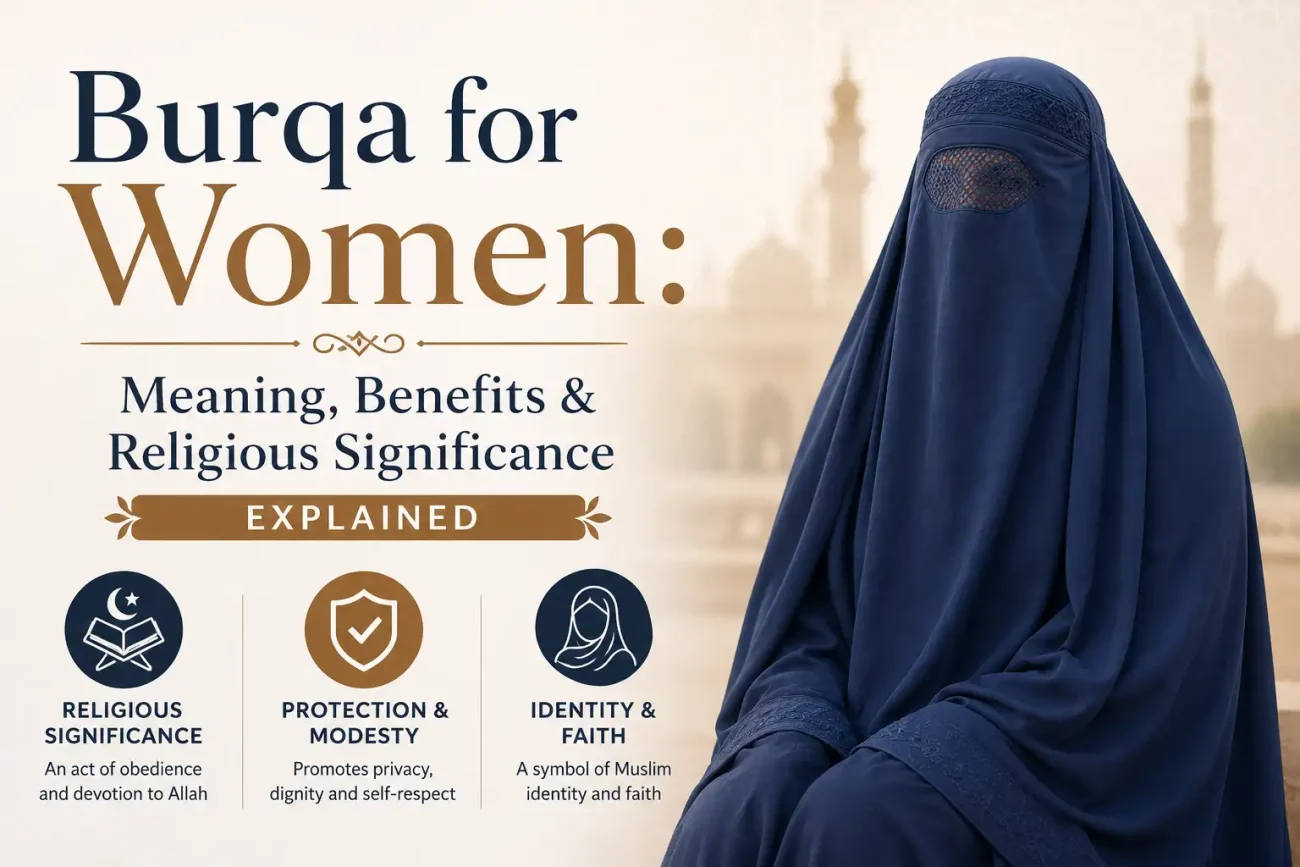
Religious freedom is the most fundamental objection. For many Muslim women, wearing the niqab or burqa is a deeply personal act of faith and modesty – not an imposition, but a choice. A face covering ban does not liberate them; it excludes them. A woman who believes her faith requires her to cover her face in public is now forced to choose between her religion and her right to participate in public life. That is not freedom – it is a different kind of compulsion.
It targets a tiny minority. Research from the University of Lucerne found that only around 30 women in Switzerland regularly wear face-covering veils. France’s burqa ban affected an estimated 2,000 women at most. Passing sweeping national legislation to address the behaviour of a vanishingly small group raises serious questions about proportionality – and about who the legislation is really for.
Women’s voices are sidelined. Critics note the bitter irony that many debates about which countries should ban the burqa are dominated by men – male politicians, male clerics, male commentators – arguing about what women should or should not wear, all in the name of protecting women. Many Muslim women who choose to wear the niqab have spoken out forcefully against these bans, insisting that their voices and choices deserve respect, not legislation.
Human rights law is clear. Organisations like Amnesty International and Human Rights Watch have condemned Islamic veil bans as violations of the rights to freedom of religion, expression, and privacy. The European Court of Human Rights has ruled on this issue, and while it has allowed some national bans to stand under certain conditions, the tension with fundamental rights remains unresolved.
Bans can increase harm. Paradoxically, niqab prohibition laws may push women who wear them out of public life entirely. If a woman’s husband or family insists she must wear a niqab, and the state says she cannot wear it outside, she may simply be forbidden from leaving the house. The ban intended to free her ends up confining her further.
A Debate That Reflects Bigger Questions
The global debate over face veil bans by country is really a proxy for much larger questions that societies everywhere are wrestling with.
How do liberal democracies balance individual religious freedom with collective secular values? Where does the state’s authority over public spaces begin and personal choice end? Can Western feminism speak for Muslim women, or does it sometimes speak over them? Is national identity something to be protected by law, or something that evolves organically?
There are no easy answers. The same burqa prohibition policy that feels like protection to one person feels like persecution to another. A French secular activist and a Muslim woman in Lyon can both be acting in good faith and reach completely opposite conclusions about what justice requires.
What is clear is that passing a law has never ended a cultural debate. The countries that have banned the burqa have not resolved these tensions – they have simply chosen a side. And the women most affected by these laws – whether they wear the veil or not – often have the least power in the rooms where these decisions are made.
The Afghan Exception – and What It Tells Us
No discussion of which countries ban the burqa is complete without acknowledging Afghanistan. Under the Taliban, the burqa is not a choice – it is a legal requirement, enforced by religious police, with women beaten or worse for non-compliance. Millions of Afghan women live under this rule today.
This fact is sometimes weaponised in Western face veil ban debates – “look what happens when you don’t control this.” But the lesson of Afghanistan points in the opposite direction. The problem there is not the garment. The problem is a government that controls women’s bodies by law. And a government that outlaws the veil by law is, structurally, doing the same thing – even if the values driving it are different.
The principle at stake, in Kabul and in Paris, is the same: should the state decide what women wear? Many would argue the answer should always be no.
Conclusion: Listening Before Legislating
The global spread of burqa and niqab prohibition laws shows no sign of slowing. Spain, Sweden, and others are actively debating similar face covering bans. Each country will weigh its own history, values, and security concerns before deciding whether to join the growing list of nations that have banned the burqa.
But if there is one thing this debate demands, it is more listening – particularly to the women whose lives these laws shape most directly. Muslim women are not a monolith. Some experience the niqab as oppression; others experience banning it as oppression. Both deserve to be heard.
A truly just policy – whatever form it takes – cannot be built without them at the table.

Leave a comment